
A cat pulling her hair out is never normal, and it’s never something to wait out. Whether you’ve spotted a bald patch, caught her chewing at her coat, or noticed more fur on the furniture than usual, excessive grooming and hair pulling are signs that something is causing your cat real discomfort, physically, emotionally, or both. The list of possible causes is longer than most pet owners expect, ranging from fleas and food allergies to chronic stress and compulsive disorders, and getting to the right answer requires a methodical approach. Keep reading to learn what’s most likely driving the behavior, how veterinarians go about identifying the cause, and why skipping the guesswork and scheduling an exam is almost always the fastest path to getting your cat comfortable again.
Medical Causes of Hair Pulling in Cats
When a cat is pulling her hair out or overgrooming, a medical cause should always be investigated first. Some of the most common physical triggers include:
Allergies
Allergies are among the leading reasons cats overgroom and pull at their fur. Cats can develop allergies to food ingredients, environmental allergens (like pollen, dust mites, or mold), or flea saliva. Flea allergy dermatitis is particularly common, even a single flea bite can trigger an intense allergic reaction in a sensitive cat. The most commonly affected areas are the belly, inner thighs, lower back, and the base of the tail.
Parasites
Fleas, mites, and lice can all cause intense itching that leads to hair pulling and excessive grooming. Because fleas can be very difficult to spot on a cat, the absence of visible fleas doesn’t rule out a flea allergy. Your veterinarian can help identify and treat parasitic causes of hair loss.
Skin Infections and Ringworm
Bacterial and fungal skin infections including ringworm, which despite its name is actually a fungus can cause itchy, inflamed skin that prompts a cat to pull at her fur. Ringworm often presents as circular patches of hair loss with scaly or crusty skin at the edges.
Pain
Cats sometimes pull hair from areas where they’re experiencing internal pain. For example, a cat pulling fur from their abdomen may be responding to gastrointestinal discomfort or bladder pain. This is called psychogenic alopecia when the overgrooming has a stress-based origin, but physical pain can look identical from the outside. Veterinary evaluation is essential to tell the difference.
Behavioral and Psychological Causes of Feline Hair Pulling
Not all hair pulling in cats is rooted in a physical condition. Some cats develop compulsive grooming as a response to stress, anxiety, or significant change.
Stress and Anxiety
Cats who are chronically stressed may turn to overgrooming as a coping mechanism. Common stressors include changes in household routine, a new pet or family member, an outdoor cat they can see through the window, loud or unpredictable noise, or a lack of environmental enrichment. When stress is the cause, managing the stressor alongside veterinary treatment is usually necessary.
Psychogenic Alopecia
Psychogenic alopecia is a compulsive disorder in cats characterized by excessive grooming or barbering (chewing and pulling at the fur) without a medical explanation. It’s more common in certain breeds and in cats that are highly sensitive or anxious by nature. A diagnosis of psychogenic alopecia is typically made after ruling out all medical causes.
What Does Feline Hair Loss From Overgrooming Look Like?
Cats who are pulling their own hair out typically present with:
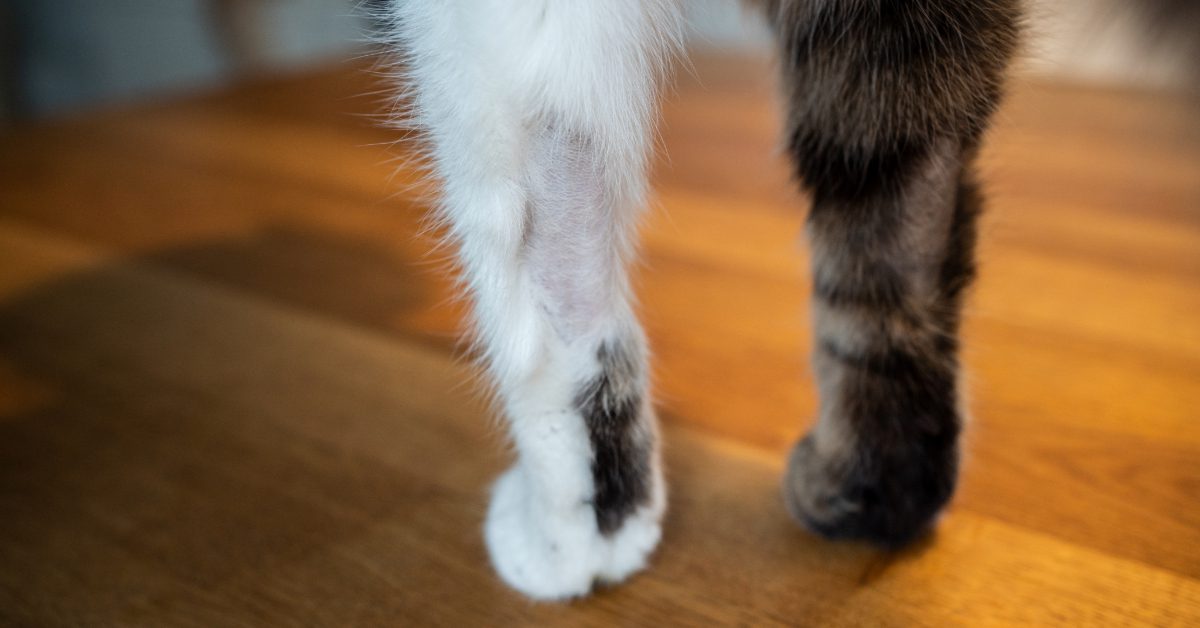
- Symmetrical bald patches, often on the abdomen, flanks, inner legs, or base of the tail
- Short, stubbly fur in the affected areas (from barbering rather than true hair loss)
- Hairballs more frequently than normal
- Visible skin irritation, redness, scabs, or scaling where the fur is missing
When to Take Your Cat to the Vet for Hair Pulling
You should schedule an exam at Bayshore Veterinary Hospital if your cat:
- Has noticeable bald patches or thinning fur in specific areas
- Is visibly scratching, biting, or pulling at her coat
- Has skin that looks irritated, red, crusty, or scaly
- Has been pulling hair for more than a few days with no obvious explanation
- Is showing other signs of illness or stress alongside the hair pulling
Finding the Cause and Getting Your Cat Comfortable
A cat pulling her hair out is communicating real discomfort, whether it’s physical itching, pain, or emotional stress. The good news is that most causes of feline hair pulling are diagnosable and treatable. Our veterinary team at Bayshore Veterinary Hospital in Holmdel, NJ can perform a thorough skin and coat evaluation, test for allergies and parasites, and recommend an individualized treatment plan. Call us at (732) 671-3110 or book an appointment online. Your cat deserves to feel comfortable in her own skin and the right diagnosis makes that possible.
Recent Posts
About Us
Bayshore Veterinary Hospital has been caring for pets and their families since 2001, building trusted relationships through compassionate, Fear Free veterinary care. Whether your visit is for a routine checkup or something unexpected, we’re here to listen, support, and guide you every step of the way. Call (732) 671-3110 if you have any questions or would like to schedule an appointment.